THE DIFFERENT WILLIAM OF WILLIAM AND MARY
 In my last newsletter I wrote about a certain William of William and Mary, drawing from a chapter within a manuscript I am currently writing called Big Issues We Face Today. That newsletter was titled, “A Different Kind of William and Mary,” not to be confused with the William and Mary who reigned on the throne of England from 1689 until their deaths.
The William and Mary I’m writing about are two missionaries who responded to the call of Jesus to: “Go into all the world and preach the good news to all creation” (Mark 16:15).
As I wrote about last month, this William is William Borden who attended Yale University and Princeton Seminary before going to Egypt as a missionary. He died there three months later, at the age of 25, but had written in his Bible “No Reserve. No Retreat. No Regrets.”
THE MARY OF THIS WILLIAM AND MARY
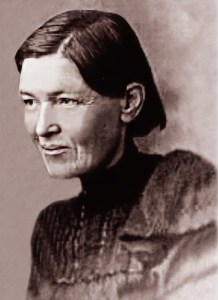 Mary Slessor (1848-1915) was raised in the slums of Dundee, Scotland. Her childhood was troubled, as she had an alcoholic father who was abusive to her mother. When he lost his job, Mary had to go to work at a jute mill at just eleven years old.
Mary’s work from 6 am to 6 pm didn’t leave time for her to get a formal education, so she taught herself to read when she was fourteen. Like William Borden, Mary too became a Christian at a young age encouraged by a mother who was a devout Christian.
Mary enjoyed going to church and loved reading the Bible, especially studying the life of Jesus in the Gospels. She committed herself to serve God and dreamed of one day doing pioneer mission work in the remote interior of Africa.
FROM THE SLUMS OF SCOTLAND TO THE MISSION FIELD IN AFRICA
Mary Slessor was 26 years old when she learned that David Livingstone, the Scottish missionary to Africa, died. He had become Mary’s hero, so she decided she would take his place.
Knowing that God was calling her to missionary service, she applied and was accepted by the Presbyterian Foreign Mission Board in 1876. At age 27, Mary sailed for Calabar (present day Nigeria).
During her first years in Calabar, Mary learned the region’s tribal language and began to understand the Efik people’s beliefs, social relationships, laws, and customs, as well as the problems of polygamy, slavery, and drunkenness.
In the late 1800s, the prevalent religion among the Efiks was a blend of traditional beliefs and practices, including animism, ancestor worship, witchcraft, and superstition. Mary was especially moved by the African practice of “twin-murder.” Tribes thought that twins were a result of a curse caused by an evil spirit who fathered one of the children. Both babies were murdered, and the mother was shunned from society. Mary responded by rescuing abandoned children, especially twins. Eventually, she raised six girls and two boys as her own.
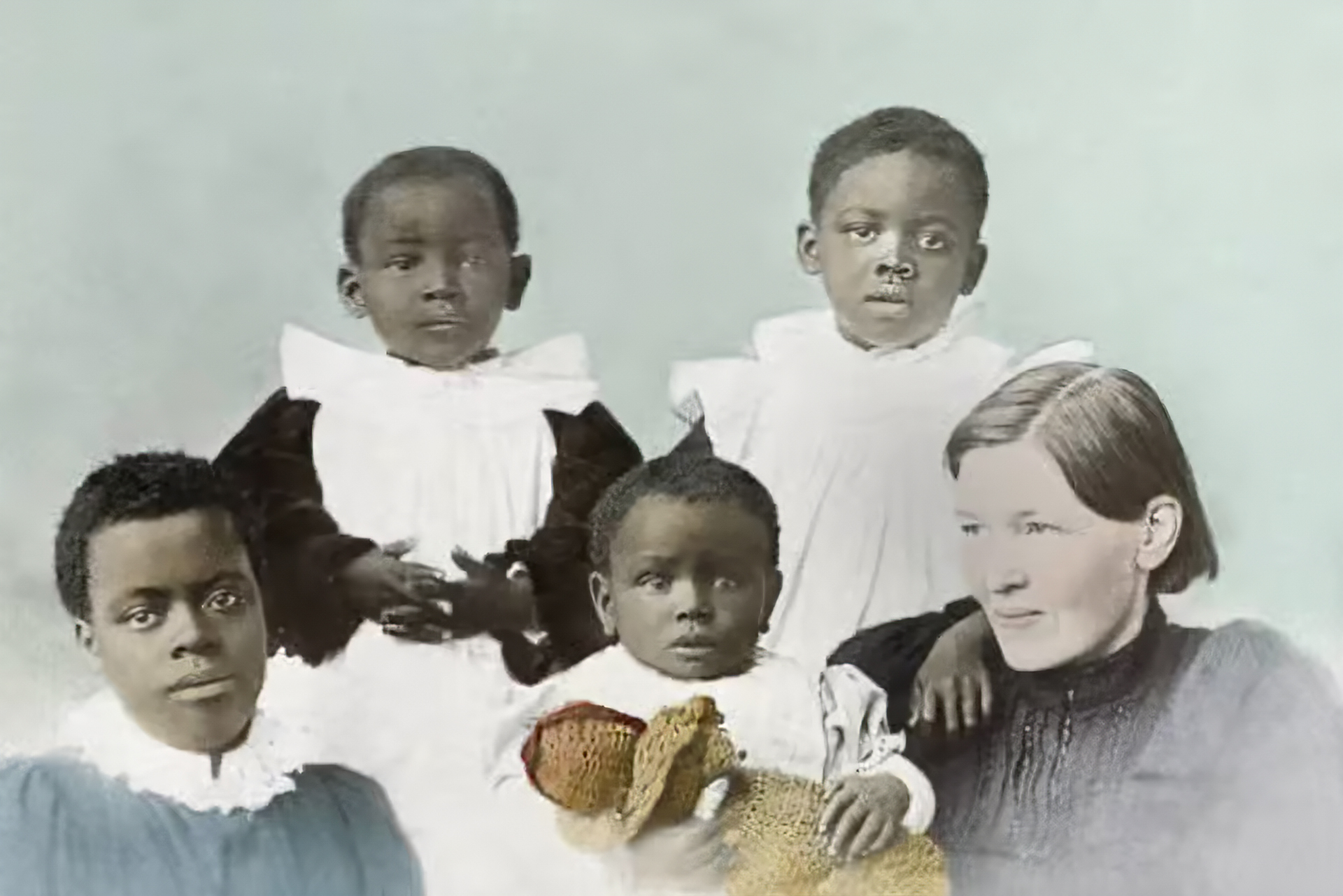
Mary not only rescued abandoned babies, but she fought against the tribal practice of killing a wife when a husband died so she could serve him in the afterlife. Mary put her life on the line more than once to rescue women from death.
To elevate women, Mary set up vocational training schools for them, using the “each-one-teach-one” principle. Mary sometimes visited different villages, meeting the people, listening to their stories of hardship and sorrow, carrying medicine to treat their illnesses, and preaching the Gospel to them in informal ways. People responded to her with affection.
15 YEARS IN THE DANGEROUS “UP COUNTRY”
In 1888, Mary went to the up-country of Okoyong, West Africa. It was an area that had claimed the lives of other missionaries. The region was known for guns, drunkenness, human sacrifice, cannibalism, skulls on display, and trial by ordeal with poison beans.
Mary was sure, however, that pioneer work was best accomplished by women, as they were less threatening than men to unreached tribes. Mary trekked four miles alone from the Calabar River to Ekenge where she met Chief Edem and his sister, Ma Eme, and received a promise of land for her house.
Ma Eme became Slessor’s friend and often aided Mary in rescuing babies, women, and slaves. Mary stayed in Okoyong for 15 years, teaching, nursing, and being a peacemaker.
 Mary became known as “the white Ma,” and started negotiating disputes. She eventually was appointed tribal judge for the whole region and became known for her reckless bravado in dealing with dangerous situations.
Trust in Mary grew and spread throughout neighboring districts. She introduced trade to the tribe, which opened the doors to good relationships with other tribes, as conflict broke out incessantly between tribes. This was instrumental in the Okoyongs’ openness to the gospel message.
READY TO GO ANYWHERE, PROVIDING…
At age 55 in 1904, Mary moved from Okoyong with her seven children to do pioneer work in Itu and other remote areas. She continued to move forward, “just to take hold” (see Philippians 3:12-14).
“I am ready to go anywhere, providing it is forward!”—Mary Slessor
Mary spent the last four years of her life itinerating between Use Ikot Oku and Ikpe, twenty miles apart on Enyong Creek, a long and difficult trek before roads were built.
Much of that time she was deathly ill, but always she rallied, even crawling to church services when necessary, determined to carry out the commission she was convinced God gave her.
By the time of her death January 13, 1915, Mary founded 50 churches and schools with 1,500 communicant members. Several thousands more were attending and inquiring. She had a huge influence over a 200 square mile area because of her courage, conviction, love, and kindness.
WILLIAM AND MARY: DIFFERENT YET SIMILAR
The differences between William and Mark are stark. William was born in a wealthy family and educated at a preparatory boarding school, while Mary was raised in poverty and was self-taught. William’s parents sent him on a chaperoned world cruise at age 16, while Mary was forced to work 12-hour days in a mill at age 11.
While there were stark differences between William and Mary, there were remarkable convergences. Though born on different continents and had never met, their lives overlapped for a period of 25 years (Mary was 41 when William was born, and 66 when he died). Neither of them married.
Both William and Mary were influenced by well-known missionaries but, more influential than their missionary heroes, were their mothers. Both mothers were committed Christians and instrumental in the lives of their children. Both mothers encouraged their children to become missionaries—in spite of their husbands.
Most influential of all was that, although born a generation apart, both William and Mary came to confess Jesus as the “the Christ, the Son of the living God.” Both gave their lives to Christ, received new life in Him, and were passionate about sharing their faith with others. Both William and Mary impacted the lives of thousands of others (William at Yale and Princeton, and Mary in Nigeria).
Although there was a 40-year difference in their ages, William and Mary died within two years of each other (William at age 26 in 1913 and Mary at age 66 in 1915). Both were buried in Africa: William in the American Cemetery in Cairo, Egypt, and Mary in the Duke Town Cemetery of Calabar, Nigeria.
SOME FINAL THOUGHTS
The impact of William Borden and Mary Slessor’s lives is radiating through time and eternity. So is the influence of their mothers, the many unnamed people who encouraged them, who taught them, who prayed with them, who worshipped with them.
So is the impact of your life radiating out even in those times when it doesn”t seem that it is and you don’t think it will.
“… your Father, who sees what is done in secret, will reward you” (Matt 6:4).
Your friendship, prayers, encouragement, and support are radiating out in my life.
Grateful for William and Mary, grateful for you, and especially grateful for God’s sending Jesus to rescue us.
Linus for the GTN Divine Expedition team

 On Expedition +